A blog that share insights that you just need a few minutes to read and digest. Why 4 minutes? 3 minutes too short, 5 minutes too long; think 4 minutes just nice.
Marketers place a great deal of emphasis on logistics, the process of designing, managing, and improving the movement of products through the supply chain. Logistics is also a relevant consideration regarding product returns, recycling and material reuse, and waste disposal—reverse logistics.
Marketing Logistics (Duration: 5.23 minutes)
The Lowdown on Logistics
When a firm does logistics planning, the focus also should be on the customer. Logistics aims to deliver exactly what the customer wants—at the right time, in the right place, and at the right price.
1. Order Processing
Order processing includes the series of activities that occur between the time an order comes into the organization and the time a product goes out the door.
Fortunately, many firms automate this process with enterprise resource planning (ERP) systems. An ERP system is a software solution that integrates information from across the entire company, including finance, order fulfilment, manufacturing, and transportation. Data need to be entered into the system only once, and then the organization automatically shares this information and links it to other related data.
2. Warehousing
Warehousing—storing goods in anticipation of sale or transfer to another member of the channel of distribution—enables marketers to provide time utility to consumers by holding on to products until consumers need them.
Part of developing effective logistics means making decisions about how many warehouses we need and where and what type of warehouse each should be.
Firms use private and public warehouses to store goods.
Private warehouses have a high initial investment but they lose less inventory due to damage.
Public warehouses allow firms to pay for a portion of warehouse space rather than having to own an entire storage facility.
A distribution center is a warehouse that stores goods for short periods and that provides other functions such as breaking bulk.
3. Materials Handling
Materials handling is the moving of products into, within, and out of warehouses. Once in the facility the goods may be handled over a dozen separate times. Procedures that limit the number of times a product must be handled decrease the likelihood of damage and reduce the cost of materials handling.
4. Transportation
Logistics decisions take into consideration options for transportation, the mode by which products move among channel members. Modes of transportation differ in their:
Dependability: ability to deliver goods safely and on time
Cost: the total transportation costs to move a product from one location to another, including any charges for loading, unloading, and in-transit storage
Speed of delivery including loading and unloading
Accessibility: number of different locations carrier serves
Capability to handle different products such as large and small, fragile or bulky
Traceability: ability to locate goods in shipment
Each mode of transportation has strengths and weaknesses that make it a good choice for different transportation needs.
Railroads: Railroads are best to carry heavy or bulky items, such as coal and other mining products, over long distances. Railroads are about average in their cost and provide moderate speed of delivery.
Water: Ships and barges carry large, bulky goods and are very important in international trade. Water transportation is relatively low in cost but can be slow.
Trucks: Trucks or motor carriers are the most important transportation mode for consumer goods, especially for shorter hauls. Motor carrier transport allows flexibility because trucks can travel to locations missed by boats, trains, and planes. Trucks also carry a wide variety of products, including perishable items. Although costs are high for longer-distance shipping, trucks are economical for shorter deliveries. Because trucks provide door-to-door service, product handling is minimal, and this reduces the chance of product damage.
Air: Air transportation is the fastest and the most expensive transportation mode. It is ideal to move high-value items such as important mail, fresh-cut flowers, and live lobsters.
Pipeline: Pipelines carry petroleum products such as oil and natural gas and a few other chemicals. Pipelines flow primarily from oil or gas fields to refineries. They are very low in cost, require little energy, and are not subject to disruption by the weather.
The Internet: As we discussed earlier in this chapter, marketers of services such as banking, news, and entertainment take advantage of distribution opportunities the Internet provides.
5. Inventory Control
Inventory control means developing and implementing a process to ensure that the firm always has sufficient quantities of goods available to meet customers’ demands.
Some companies are even phasing in a sophisticated technology (similar to the EZ Pass system many drivers use to speed through toll booths) known as radio frequency identification (RFID). RFID lets firms tag clothes, pharmaceuticals, or virtually any kind of product with tiny chips that contain information about the item’s content, origin, and destination. This technology has the potential to revolutionize inventory control and help marketers ensure that their products are on the shelves when people want to buy them.
Firms store goods for many reasons, such as enabling production to meet seasonal demand and creating economies in ordering.
Inventory control has a major impact on the overall costs of a firm’s logistics initiatives. Level loading is a manufacturing approach intended to balance the inventory holding capabilities and production capacity constraints of a manufacturer for a particular product through the implementation of a consistent production schedule employed both during and beyond periods of peak demands.
Stock-outs are zero-inventory situations resulting in lost sales and customer dissatisfaction may be very negative. To balance these two opposing needs, manufacturers turn to just in time (JIT) inventory techniques with their suppliers. JIT sets up delivery of goods just as they are needed on the production floor. This minimizes the cost of holding inventory while it ensures the inventory will be there when customers need it.
SELF-CHECK: REFLECTION
Think about a store in which your can of beans has an RFID and can be located at any minute.
What are the advantages of such a system (especially when tracking more expensive/volatile products than beans)?
A large part of the marketer’s ability to deliver a value proposition rests on the ability to understand and develop effective distribution strategies. The supply chain includes all the activities necessary to turn raw materials into a good or service and put it into the hands of the consumer or business customer. A large part of the marketer’s ability to deliver a value proposition rests on the ability to understand and develop effective supply chain strategies. Cross-docking is a supply chain efficiency technique in which products are transferred off a supplier’s truck directly onto a buyer’s truck bound for the next distribution point, such as a retail store.
Outsourcing occurs when firms obtain outside vendors to provide goods or services that might be supplied in-house. Outsource firms are organizations with whom the company has developed a partnership or cooperative business arrangement.
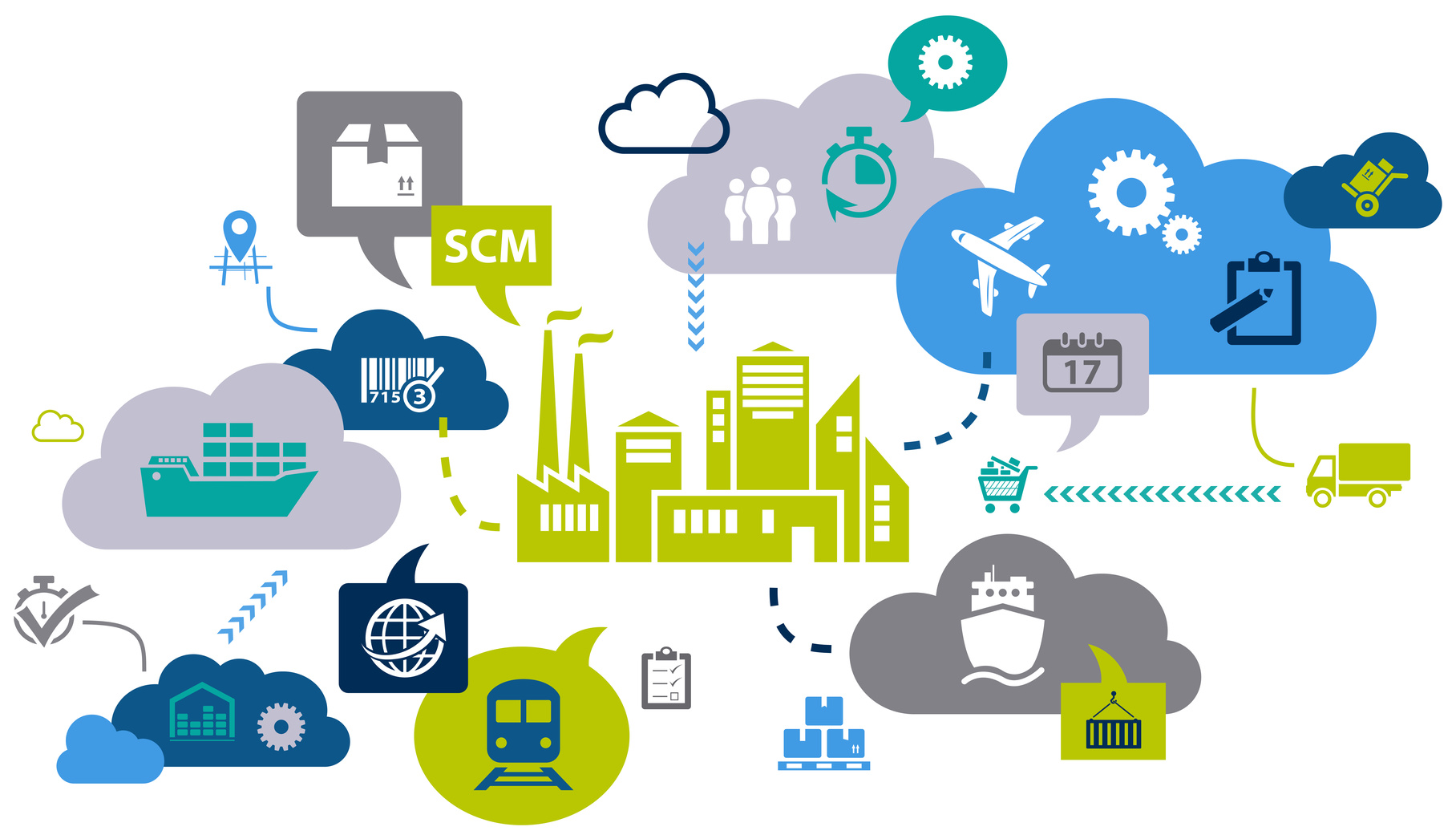
Supply chain management is the coordination of flows among the firms in a supply chain to maximize total profitability. These “flows” include not only the physical movement of goods but also the sharing of information about the goods—that is, supply chain partners must synchronize their activities with one another.
Insourcing occurs when companies contract with a specialist who services their supply chains. Unlike the outsourcing process where a company delegates nonessential tasks to subcontractors, insourcing means that the client company brings in an external company to run its essential operations.
The major difference between a supply chain and a channel of distribution is the number of members and their functions. A supply chain is broader; it consists of those firms that supply the raw materials, component parts, and supplies necessary for a firm to produce a good or service plus the firms that facilitate the movement of that product to the ultimate users of the product. This last part—the firms that get the product to the ultimate users—is the channel of distribution.
DISCUSSION
The supply chain concept looks at both the inputs of a firm and the means of firms that move the product from the manufacturer to the consumer.
Do you think marketers should be concerned with the total supply chain concept? Why or why not?
Anticipatory shipping is a system of delivering products to customers before they place an order, utilizing predictive analytics to determine what customers want and then shipping the products automatically.
The sharing economy refers to non-ownership forms of consumption that are popular as more consumers turn toward the renting, sharing, and bartering of products and services. This trend has implications for logistics, the supply chain, and channels and physical distribution.
When retailers and manufacturers work together within a channel of distribution, linkages can be made stronger and the profitability of all channel members can be improved. In this topic, students learn the definition and functions of a distribution channel. The length and intensity of the channels are explained. Continually emphasized is the need for developing channel objectives, careful selection of channel members, and the management of the channel. Through these systematic efforts, businesses can maintain a higher level of customer satisfaction and profitability.
After studying this topic, students should be able to:
Explain what a distribution channel is, identify types of wholesaling intermediaries, and describe the different types of distribution channels.
List and explain the steps to plan a distribution channel strategy.
Discuss the concepts of logistics and supply chain.
Introduction (Duration: 3.17 minutes)
TYPES OF DISTRIBUTION CHANNELS AND WHOLESALE INTERMEDIARIES
The delivery of goods to customers involves physical distribution, which refers to the activities used to move finished goods from manufacturers to final customers. Physical distribution activities include order processing, warehousing, materials handling, transportation, and inventory control.
The focus of logistics is on the customer. The customer’s goals become the logistics provider’s goals.
A channel of distribution consists of, at a minimum, a producer—the individual or firm that manufactures or produces a good or service—and a customer. This is a direct channel. Channels often are indirect because they include one or more channel intermediaries—firms or individuals such as wholesalers, agents, brokers, and retailers who in some way help move the product to the consumer or business user.
Functions of Distribution Channels
Channels provide time, place, and ownership utility.
Distribution channels provide a number of logistics or physical distribution functions that increase the efficiency of the flow of goods from producer to customer.
Distribution channels create efficiencies because they reduce the number of transactions necessary for goods to flow from many different manufacturers to large numbers of customers. This occurs in two ways. The first is breaking bulk. Wholesalers and retailers purchase large quantities (usually cases) of goods from manufacturers but sell only one or a few at a time to many different customers. Second, channel intermediaries reduce the number of transactions when they create assortments—they provide a variety of products in one location—so that customers can conveniently buy many different items from one seller at one time. The transportation and storage of goods are other physical distribution functions.
Channel intermediaries also perform a number of facilitating functions that make the purchase process easier for customers and manufacturers. Channel members perform risk-taking functions.
Intermediaries perform a variety of communication and transaction functions, providing marketing information to the sales force and to customers with complaints or other inputs concerning the product.
Evolution of Distribution Functions
Roles of Channel Members (Duration: 12.02 minutes)
In the future, channel intermediaries that physically handle the product may become obsolete. Already companies are eliminating many traditional intermediaries because they find that they do not add enough value in the distribution channel—a process we call disintermediation (of the channel of distribution). For marketers, disintermediation reduces costs.
Some companies use the Internet to make coordination among members of a supply chain more effective in ways that end consumers never see. These firms develop better ways to implement knowledge management, which refers to a comprehensive approach that collects, organizes, stores, and retrieves a firm’s information assets. These assets include both databases and company documents and the practical knowledge of employees whose past experience may be relevant to solving a new problem.
One of the more vexing problems with Internet distribution is the potential for online distribution piracy, which is the theft and unauthorized repurposing of intellectual property via the Internet. For example, unauthorized downloads of music continue to pose a major challenge to the “recording” industry.
1. Wholesaling Intermediaries
Wholesaling intermediaries are firms that handle the flow of products from the manufacturer to the retailer or business user.
2. Independent Intermediaries
Independent intermediaries do business with many different manufacturers and many different customers. Because no manufacturer owns or controls them, they make it possible for many manufacturers to serve customers throughout the world while they keep prices low.
Merchant wholesalers are independent intermediaries that buy goods from manufacturers and sell to retailers and other business-to-business customers. Because merchant wholesalers take title to the goods (that is, they legally own them), they assume certain risks and can suffer losses if products are damaged, become outdated or obsolete, are stolen, or just do not sell. On the other hand, because they own the products, they are free to develop their own marketing strategies including setting the prices they charge their customers. There are several different kinds of merchant wholesalers:
Full-service merchant wholesalers provide a wide range of services for their customers, including delivery, credit, product-use assistance, repairs, advertising, and other promotional support—even market research.
In contrast, limited-service merchant wholesalers provide fewer services for their customers. Like full-service wholesalers, limited-service wholesalers take title to merchandise but are less likely to provide services such as delivery, credit, or marketing assistance to retailers. Specific types of limited-service wholesalers include the following:
Cash-and-carry wholesalers provide low-cost merchandise for retailers and industrial customers that are too small for other wholesalers’ sales representatives to call on.
Truck jobbers carry their products to small business customer locations for their inspection and selection.
Drop shippers are limited-function wholesalers that take title to the merchandise but never actually take possession of it.
Mail-order wholesalers sell products to small retailers and other industrial customers, often located in remote areas, through catalogues rather than a sales force. Rack jobbers supply retailers with specialty items such as health and beauty products and magazines.
Merchandise agents or brokers are the second major type of independent intermediary. Agents and brokers provide services in exchange for commissions. They may or may not take possession of the product, but they never take title; that is, they do not accept legal ownership of the product. Agents normally represent buyers or sellers on an ongoing basis, whereas clients employ brokers for a short period.
Manufacturers’ agents, or manufacturers’ reps, are independent salespeople who carry several lines of non-competing products.
Selling agents, including export/import agents, market a whole product line or one manufacturer’s total output.
Commission merchants are sales agents who receive goods, primarily agricultural products such as grain or livestock, on consignment—that is, they take possession of products without taking title.
Merchandise brokers, including export/import brokers, are intermediaries that facilitate transactions in markets such as real estate, food, and used equipment, in which there are lots of small buyers and sellers.
3. Manufacturer-Owned Intermediaries
Sometimes manufacturers set up their own channel intermediaries. In this way, they can operate separate business units that perform all the functions of independent intermediaries while at the same time they can still maintain complete control over the channel.
Sales branches are manufacturer-owned facilities that, like independent wholesalers, carry inventory and provide sales and service to customers in a specific geographic area.
Sales offices are manufacturer-owned facilities that, like agents, do not carry inventory but provide selling functions for the manufacturer in a specific geographic area.
Manufacturers’ showrooms are manufacturer owned or leased facilities. These showrooms contain products that are permanently displayed.
Types of Distribution Channels
When they develop distribution (place) strategies, marketers first consider different channel levels. This refers to the number of distinct categories of intermediaries that make up a channel of distribution.
1. Consumer Channels
The simplest channel is a direct channel. A direct channel is used for a number of reasons. It may allow the producer to serve its customers better and at a lower price than is possible using a retailer. Using a direct channel gives control to the producer. When the producer handles distribution, it maintains control of pricing, service, and delivery—all elements of the transaction.
The producer–retailer consumer channel is the shortest indirect channel.
The producer–wholesaler–retailer–consumer channel is a common distribution channel, giving retailers a large selection of products.
2. B2B Channels
Business-to-business distribution channels facilitate the flow of goods from a producer to an organizational or business customer. They can be direct or indirect. The simplest indirect channel in industrial markets occurs when the single intermediary—a merchant wholesaler we refer to as an industrial distributor rather than a retailer—buys products from a manufacturer and sells them to business customers. Because business-to-business marketing often means selling high-dollar, high-profit items to a market made up of only a few customers, direct channels are common.
3. Dual and Hybrid Distribution Systems
A dual or multiple distribution system occurs when producers, dealers, wholesalers, retailers, and customers interact with more than one type of channel. This is common in the pharmaceutical industry. Instead of serving a target market with a single channel, some companies combine channels—direct sales, distributors, retail sales, and direct mail to create a hybrid marketing system.
4.Distribution Channels and the Marketing Mix
How do decisions regarding place relate to the other three Ps? Place decisions affect pricing. Marketers that distribute products through low-priced retailers such as Walmart, T.J. Maxx, and Marshalls will have different pricing objectives and strategies than will those that sell to specialty stores or traditional department stores.
Distribution decisions can sometimes give a product a distinct position in its market. For example, Enterprise Rent-a-Car avoids being overly dependent on the cutthroat rental car market as it opens retail outlets in primary locations in residential areas and local business centers.
Subscription boxes represent a new business model for distribution that supplies surprises by sending out a box each month filled with items you never knew you wanted but you just have to have.
Ethics in the Distribution Channel
Many large retail chains force manufacturers to pay a slotting allowance—a fee paid in exchange for agreeing to place a
manufacturer’s products on a retailer’s valuable shelf space.
Product diversion is the distribution of a product through one or more channels not authorized for use by the manufacturer of the product. A diverter is an entity that facilitates the distribution of a product through one or more channels not authorized for use by the manufacturer of the product.
Another ethical issue involves the sheer size of a particular channel intermediary—be it manufacturer, wholesaler, retailer, or other intermediaries. Giant retailer Walmart, increasingly criticized for forcing scores of independent competitors (i.e., “mom-and-pop stores”) to go out of business, has begun a very visible program to help its smaller rivals.
It is important for all channel intermediaries to behave and treat each other in a professional, ethical manner—and, to do no harm to consumers (financially or otherwise) through their channel activities.
SELF-CHECK: REFLECTION
Computer manufacturers frequently use a hybrid marketing system to distribute their products. Where can you buy a computer? Specify the location.
What factors are important in determining whether a manufacturer should choose a direct or indirect channel? >POST YOUR ANSWER HERE<
DEVELOP A CHANNEL STRATEGY
Firms that operate within a channel of distribution—manufacturers, wholesalers, and retailers—do distribution planning, which is a process of developing distribution objectives, evaluating internal and external environmental influences on distribution, and choosing a distribution strategy The following is a discussion of distribution planning from the perspective of manufacturers, wholesalers, and retailers.
Step 1: Develop Distribution Objectives
The first step to decide on a distribution plan is to develop objectives that support the organization’s overall marketing goals. In general, the overall objective of any distribution plan is to make a firm’s product available when, where, and in the quantities, customers want at the minimum cost. More specific distribution objectives, however, depend on the characteristics of the product and the market.
Step 2: Evaluate Internal and External Environmental Influences
After they set their distribution objectives, marketers must consider their internal and external environments to develop the best channel structure. The organization must also examine issues such as its own ability to handle distribution functions, what channel intermediaries are available, the ability of customers to access these intermediaries, and how the competition distributes its products. Finally, when they study competitors’ distribution strategies, marketers learn from their successes and failures.
Step 3: Choose a Distribution Strategy
Managing Channels (Duration: 39.39 minutes)
Distribution intensity means the number of intermediaries at each level of the channel. Planning a distribution strategy means making at least three decisions.
Decision 1: Conventional, Vertical, or Horizontal Marketing System?
A conventional marketing system is a multilevel distribution channel in which members work independently of one another. Their relationships are limited to simply buying and selling from one another.
A vertical marketing system (VMS) is a channel in which there is formal cooperation among channel members at two or more different levels: manufacturing, wholesaling, and retailing. Often, a vertical marketing system can provide a level of cooperation and efficiency not possible with a conventional channel. There are three types of vertical marketing systems:
In an administered VMS, channel members remain independent but voluntarily work together to become the power of a single channel member.
In a corporate VMS, a single firm owns manufacturing, wholesaling, and retailing operations, giving the firm total control over all channel operations.
In a contractual VMS, cooperation is enforced by a contract that spells out each member’s rights and responsibilities and how they will cooperate. The channel members can have more impact as a group than they could alone. A discussion of three types of contractual VMS follows:
In a wholesaler-sponsored VMS, wholesalers get retailers to work together under their leadership in a voluntary chain.
A retailer cooperative is a group of retailers that has established a wholesaling operation to help them compete more effectively with the large chains.
Franchise organizations are a third type of contractual VMS. Franchise organizations include a franchiser (a manufacturer or a service provider) who allows an entrepreneur (the franchisee) to use the franchise name and marketing plan for a fee. In these organizations, contractual arrangements explicitly define and strictly enforce channel cooperation.
In a horizontal marketing system, two or more firms at the same channel level agree to work together to get their product to the customer. Sometimes these agreements are between unrelated businesses.
Decision 2: Intensive, Exclusive, or Selective Distribution?
The three basic choices for deciding how many wholesalers and retailers to carry a product are intensive, exclusive, and selective distribution.
Intensive distribution aims at maximizing market coverage by selling a product through all wholesalers or retailers that will stock and sell the product. Availability is more important than any other consideration in customers’ purchase decisions. Products such as gum, milk, and soft drinks are intensively distributed.
Exclusive distribution means limiting distribution to a single outlet in a particular region. Some cars, pianos, and products with high price tags are sold this way. The gray market is a distribution channel in which a product’s sale to a customer is technically legal, but is viewed as inappropriate by the manufacturer of the related product. Grey markets often emerge around high-end luxury goods sold through exclusive distribution.
Selective distribution fits when demand is so large that exclusive distribution is inadequate, but selling costs, service requirements, or other factors make intensive distribution a poor fit. Selective distribution is suitable for shopping products such as household appliances and electronic equipment.
Step 4: Develop Distribution Tactics
These decisions are usually about the type of distribution system to use, such as a direct or indirect channel, or a conventional or integrated channel. These decisions have a direct impact on customer satisfaction.
Channel Levels (Duration: 8.38 minutes)
Decision 1: Select Channel Partners
Selecting channel partners usually results in a long-term commitment. Questions to be considered include: Will the member contribute to profitability? Can the member provide services the customer wants? What impact will this have on channel control? Who are the channel members’ competitors channel partners? What is the firm’s dedication to social responsibility?
Decision 2: Manage the Channel
The channel leader, sometimes called a channel captain, is the dominant firm that controls the channel. The captain has power relative to other channel members. The power comes from a variety of sources:
A firm has economic power when it has the ability to control resources.
A firm such as a franchiser has legitimate power if it has the legal authority to be in charge.
A producer firm has a reward or coercive power if it engages in the exclusive distribution and has the ability to give profitable products and to take them away from the channel intermediaries.
Channel cooperation is to the benefit of everyone. It occurs when producers, wholesalers, and retailers depend on one another for success. Channel conflict refers to incompatible goals, poor communication, and disagreement over roles, responsibilities, and functions among firms at different levels of the same distribution channel that may threaten a manufacturer’s distribution strategy.

 SELF-CHECK: REFLECTION