Pricing Strategy
Price. Simply defined, price is the amount of money charged for a good or service. More broadly, price is the sum of the values consumers exchange for the benefits of having or using the product or service.
|
 What is Pricing?
Factors to Consider When Setting Price
|
A. Internal Factors
Marketing Objectives
Survival. It is used when the economy slumps or a recession is going on. A manufacturing firm can reduce production to match demand and a hotel can cut rates to create the best cash flow.
Current profit maximization. Companies may choose the price that will produce the maximum current profit, cash flow, or return on investment, seeking financial outcomes rather than long-run performance.
Market-share leadership. When companies believe that a company with the largest market share will eventually enjoy low costs and high long-run profit, they set low opening rates and strive to be the market-share leader.
Product-quality leadership. Hotels like the Ritz-Carlton chain charge a high price for their high-cost products to capture the luxury market.
Other objectives. Stabilize the market, create excitement for a new product, and draw more attention.
Marketing Mix: Price must be coordinated with product design, distribution, and promotion decisions to form a consistent and effective marketing program.
Costs
Fixed costs. Costs that do not vary with production or sales level.
Variable costs. Costs vary directly with the level of production.
Organization considerations.
Management must decide who within the organization should set prices. In small companies, this will be top management; in large companies, pricing is typically handled by a corporate department or by a regional or unit manager under guidelines established by corporate management.
B. External Factors
Nature of the market and demand
Cross-selling. The company’s other products are sold to the guest.
Upselling. Sales and reservation employees are trained to offer continuously a higher-priced product that will better meet the customer’s needs, rather than settling for the lowest price.
Consumer perception of price and value
It is the consumer who decides whether a product’s price is right. The price must be buyer-oriented. The price decision requires a creative awareness of the target market and recognition of the buyers’ differences.
Analyzing the price–demand relationship
Demand and price are inversely related; the higher the price, the lower the demand. Most demand curves slope downward in either straight or a curved line. The prestige goods demand curve sometimes slopes upward.
Price elasticity of demand.
If demand hardly varies with a small change in price, the demand is inelastic; if demand changes greatly, the demand is elastic. Buyers are less price-sensitive when the product is unique or when it is high in quality, prestige, or exclusiveness.
Consumers are also less price-sensitive when substitute products are hard to find. If demand is elastic, sellers generally consider lowering their prices to produce more total revenue.
Factors Affecting Price Sensitivity
Unique value effect. Creating the perception that your offering is different from those of your competitors avoids price competition.
Substitute awareness effect. Lack of awareness of the existence of alternatives reduces price sensitivity.
Business expenditure effect. When someone else pays the bill, the customer is less price-sensitive.
End-benefit effect. Consumers are more price-sensitive when the price of the product accounts for a large share of the total cost of the end benefit.
Total expenditure effect. The more someone spends on a product, the more sensitive he or she is to the product’s price.
Price quality effect. Consumers tend to equate price with quality, especially when they lack any prior experience with the product.
Competitors’ price and offers
When a company is aware of its competitors’ prices and offers, it can use this information as a starting point for deciding its own pricing.
Other environmental factors
Other factors include inflation, boom or recession, interest rates, government purchasing, and the birth of new technology.
General Pricing Approaches
The price the company charges is somewhere between one that is too low to produce a profit and one that is too high to produce sufficient demand. Product costs set a floor for the price, while consumer perceptions of the product’s value set the ceiling. The company must consider competitors’ prices and other external and internal factors to find the best price between these two extremes. Companies set prices by selecting a general pricing approach that includes one or more of these sets of factors.
|
Cost-Based Pricing
The simplest pricing method is cost-plus pricing, which is adding a standard markup to the cost of the product •
Markup pricing remains popular for many reasons
Sellers are more certain about costs than about demand
Tying the price to cost simplifies pricing
Managers do not have to adjust prices as demand changes
Break-Even Pricing
The firm tries to determine the price at which it will break even
Target Profit Pricing - Targets a certain return on investment
Value-Based Pricing
An increasing number of companies are basing their prices on the products’ perceived value
Value-based pricing uses the buyers’ perceptions of value, not the seller’s cost, as the key to pricing
Value-based pricing means that the marketer cannot design a product and marketing program and then set the price
Price is considered along with other marketing mix variables before the marketing program is set
The company uses the non-price variables in the marketing mix to build perceived value in the buyers’ minds, setting the price to match the perceived value
Competition-Based Pricing
A strategy of going-rate pricing is the establishment of prices based largely on those of competitors, with less attention paid to costs or demand
The firm might charge the same, more, or less than its major competitors
Pricing Strategies
New Product Pricing Strategies
|
Prestige pricing. Hotels or restaurants seeking to position themselves as luxurious and elegant enter the market with a high price that supports this position.
Market-skimming pricing. Price skimming is setting a high price when the market is price-insensitive. It is common in industries with high research and development costs, such as pharmaceutical companies and computer firms. Price skimming can make sense when lowering the price will create less revenue. Price skimming can be an effective short-term policy. However, one danger is that competition will notice the high prices that consumers are willing to pay and enter the market, creating more supply and eventually reducing prices
Marketing-penetration pricing. Companies set a low initial price to penetrate the market quickly and deeply, attracting many buyers and winning a large market share. Several conditions favor setting a low price:
The market must be highly price-sensitive so that a low price produces more market growth
There should be economics that reduces costs as sales volume increases
The low price must help keep out competition
Existing Product Pricing Strategies
|
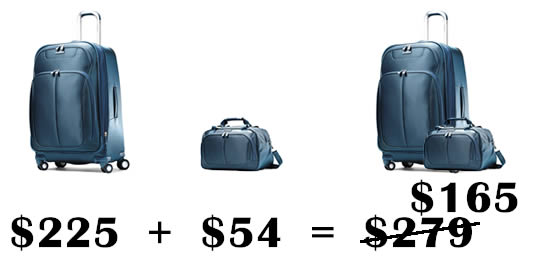
Product-bundle pricing. Sellers using product-bundle pricing combine several of their products and offer the bundle at a reduced price. Most used by cruise lines.
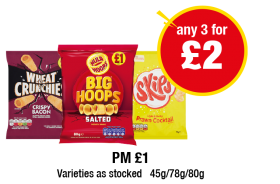
Volume discounts. Hotels have special rates to attract customers who are likely to purchase a large number of hotel rooms, either for a single period or throughout the year.
Discounts based on time of purchase. A seasonal discount is a price reduction to buyers who purchase services out of season when the demand is lower. Seasonal discounts allow the hotel to keep demand steady during the year.

Discriminatory pricing. Segmentation of the market and pricing differences based on price elasticity characteristics of the segments. In discriminatory pricing, the company sells a product or service at two or more prices, although the difference in price is not based on differences in cost. It maximizes the amount that each customer pays.
Revenue management. A yield-management system is used to maximize a hotel’s yield or contribution margin.
Psychological pricing. Psychological aspects such as prestige, reference prices, round figures, and ignoring end figures are used in pricing.

Promotional pricing. Hotels temporarily price their products below list price, and sometimes even below cost, for special occasions, such as introduction or festivities. Promotional pricing gives guests a reason to come and promotes a positive image for the hotel

Initiating Price Changes
After developing their price structures and strategies, companies may face occasions when they want to cut or raise prices
|
Initiating Price Cuts
Several situations may lead a company to cut prices – one is excess capacity
Companies may also cut prices in a drive to dominate the market or increase market share through lower costs
Either the company starts with lower costs than its competitors, or it cuts prices in the hope of gaining market share through a larger volume
Initiating Price Increases
Inevitably many companies must eventually raise prices
They do this knowing that price increases may be resented by customers, dealers, and their own salesforce
However, a successful price increase can greatly increase profits
In passing price increases on to customers, the company should avoid the image of price gouger
It is best to increase prices when customers perceive the price increase to be justified
Price increases should be supported by a company communication program informing customers and employees why prices are being increased

No comments:
Post a Comment
Note: Only a member of this blog may post a comment.