Charismatic and Transformational Leadership
After studying this topic, you should be able to:
- Identify the similarities and differences between charismatic and transformational leadership.
- Discuss how leaders, followers, and the situation affect attributions of charisma.
- Analyse the traits, behaviors, and influence processes included in each type of leadership.
- Explain the benefits and costs of charismatic leadership for followers and the organization.
In the 1980s, management researchers became very interested in the emotional and symbolic aspects of leadership. These processes help us to understand how leaders influence followers to make self‐sacrifices and put the needs of the mission or organization above their materialistic self‐interests. Theories of charismatic and transformational leadership describe this important aspect of leadership.
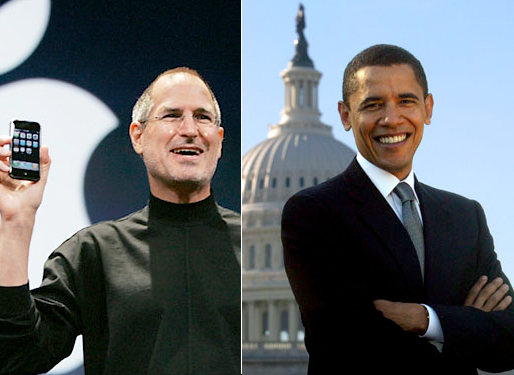
Like many great leaders, Ronald Reagan had charisma. So does Barack Obama. Thomas Watson, Alfred Sloan, Steve Jobs, and Richard Branson are good examples of charismatic leaders in the industry. Charisma is a rather elusive concept; it is easy to spot but hard to define. Charisma is a Greek word that means “divinely inspired gift,” such as the ability to perform miracles or predict future events.
Weber (1947) used the term to describe a form of influence based not on tradition or formal authority but rather on follower perceptions that the leader is endowed with exceptional qualities. According to Weber, charisma occurs during a social crisis when a leader emerges with a radical vision that offers a solution to the crisis and attracts followers who believe in the vision. The followers experience some successes that make the vision appear attainable, and they come to perceive the leader as extraordinary.
Transformational leadership in another type of theory used to describe how effective leaders inspire and transform followers by appealing to their ideals and emotions. The terms transformational and charismatic are used interchangeably by many writers, but despite the similarities there are some important distinctions. This chapter describes the major theories of charismatic and transformational leadership, compares and evaluates the theories, reviews the research findings, and provides some practical guidelines for leaders.
Attribution Theory of Charismatic Leadership
Conger and Kanungo (1987) proposed a theory of charismatic leadership based on the assumption that charisma is an attributional phenomenon. Subsequently, a refined version of the theory was presented by Conger (1989) and by Conger and Kanungo (1998). According to the theory, follower attribution of charismatic qualities to a leader is jointly determined by the leader’s behavior, expertise, and aspects of the situation.
Follower attributions of charisma depend on several types of leader behavior. These behaviors are not assumed to be present in every charismatic leader to the same extent, and their relative importance depends to some extent on the leadership situation.
Behavior of Charismatic Leaders
1. A Novel and Appealing Vision
Charisma is more likely to be attributed to leaders who advocate a vision that is highly discrepant from the status quo, but not so radical that followers will view the leader as incompetent or insane. A leader who supports the status quo or advocates only small, incremental changes will not be viewed as charismatic.
2. Emotional Appeals to Values
Followers are more likely to attribute charisma to leaders who inspire them with emotional appeals to their values and ideals. Leaders who use authority to implement an innovative strategy for attaining important objectives may gain more expert power if the strategy is successful, but unless they articulate an ideological vision to justify the strategy, they are unlikely to appear charismatic.
3. Expression of Confidence and Optimism
Leaders who appear confident about their proposals are more likely to be viewed as charismatic than leaders who appear doubtful and confused. Unless the leader communicates self‐confidence, the success of an innovative strategy may be attributed more to luck than to expertise. A leader’s confidence and enthusiasm can be contagious. Followers who believe the leader knows how to attain the shared objective will work harder, thereby increasing the actual probability of success.
4. Self-Sacrifice
Leaders are more likely to be viewed as charismatic if they make self‐sacrifices for the benefit of followers, and they take personal risks or incur high costs to achieve the vision they espouse. Trust appears to be an important component of charisma, and followers have more trust in a leader who seems less motivated by self‐interest than by concern for followers. Most impressive is a leader who actually risks substantial personal loss in terms of status, money, leadership position, or membership in the organization.
5. Unconventional Behavior and Methods
Charisma is more likely to be attributed to leaders who act in unconventional ways to achieve the vision. The leader’s methods for attaining the idealized goal must differ from conventional ways of doing things in order to impress followers that the leader is extraordinary. The use of innovative strategies that appear successful results in attribution of superior expertise to the leader by followers.
6. Demonstrate Exceptional Abilities
The charismatic leader also arouses a sense of excitement and adventure. He or she is an eloquent speaker who exhibits superior verbal skills, which help communicate the vision and motivate followers. Walt Disney mesmerized people with his storytelling; had enormous creative talent; and instilled in his organization strong values of good taste, risk-taking, and innovation.
CHARISMATIC LEADERSHIP
|

Traits and Values of Charismatic Leaders
Evidence of charismatic leadership is provided by the leader-follower relationship, and a charismatic leader has profound and unusual effects on followers. Followers perceive that the leader’s beliefs are correct, they willingly obey the leader, they feel affection toward the leader, they are emotionally involved in the mission of the group or organization, they have high-performance goals, and they believe that they can contribute to the success of the mission.
Charismatic leaders are likely to have a strong need for power, high self‐confidence, and a strong conviction in their own beliefs and ideals. The leadership behaviors that explain how a charismatic leader influences the attitudes and behavior of followers include the following:
- Articulating an appealing vision,
- Using strong, expressive forms of communication when articulating the vision
- Taking personal risks and making self‐sacrifices to attain the vision
- Communicating high expectations
- Expressing optimism and confidence in followers
- Modeling behaviors consistent with the vision,
- Managing follower impressions of the leader
- Building identification with the group or organization
- Empowering followers.
Consequences of Charismatic Leadership
How to differentiate between positive and negative charismatic leaders has been a problem for leadership theory. It is not always clear whether a particular leader should be classified as a positive or negative charismatic. One approach is to examine the consequences for followers. However, most charismatic leaders have both positive and negative effects on followers, and it is not always clear whether a particular outcome is beneficial or detrimental.
Effects of Positive Charismatics
|
Dysfunctional Attributes of a Narcissistic Charismatic Leader • Being in awe of the leader reduces good suggestions by followers. |
Effects of Charismatic Leaders - Practical Implications for Organizations
Charismatic leadership is risky. It is impossible to predict the result when people give too much power to an individual leader in the often irrational hope that he or she will actually be able to deliver on a vision of a better future. The power is often misused while the vision remains an empty dream. History is full of charismatic leaders who caused untold death, destruction, and misery in the process of building an empire, leading a revolution, or founding a new religion.
Charisma is a rare and transitory phenomenon. The beneficial accomplishments of a charismatic leader may not persist after the leader departs. The early dramatic successes that make a leader appear charismatic can sow the seeds of eventual failure if overconfidence encourages risky decisions that will endanger the organization and its members.
-----------------------------------------------------------------
Transformational Leadership

Charisma contributes to transformational leadership. Transformational leaders motivate people to transcend their personal interests for the sake of the larger community. They generate excitement and revitalize organizations. At Amazon, chief executive Jeff Bezos generates excitement with his zeal to create a great customer experience coupled with a determination to focus on the long term, no matter how hard investors press for quick profits. His vision keeps employees innovating and gives them a sense of purpose greater than quarterly financial performance.
The transformational process moves beyond the more traditional transactional approach to leadership. Transactional leaders view management as a series of transactions in which they use their legitimate, reward, and coercive powers to give commands and exchange rewards for services rendered. Unlike transformational leadership, transactional leadership is dispassionate; it does not excite, transform, empower, or inspire people to focus on the interests of the group or organization. However, transactional approaches may be more effective for individualists than for collectivists
Several theories of transformational or inspirational leadership were proposed, but the version of the theory formulated by Bass (1985, 1996) has influenced leadership research more than any of the others. With transformational leadership, the followers feel trust, admiration, loyalty, and respect toward the leader, and they are motivated to do more than they originally expected to do. The leader transforms and motivates
followers by:
(1) making them more aware of the importance of task outcomes,
(2) inducing them to transcend their own self‐interest for the sake of the organization or team
(3) activating their higher‐order needs.
In contrast, transactional leadership involves an exchange process that may result in follower compliance with leader requests but is not likely to generate enthusiasm and commitment to task objectives. According to Bass, transformational leadership increases follower motivation and performance more than transactional leadership, but effective leaders use a combination of both types of leadership.
The original formulation of the theory included three types of transformational behavior. Idealized influence
is behavior that increases follower identification with the leader, such as setting an example of courage and dedication and making self‐sacrifices to benefit followers. Intellectual stimulation is behavior that influences followers to view problems from a new perspective and look for more creative solutions. Individualized consideration includes providing support, encouragement, and coaching to followers.
A revision of the theory added another transformational behavior called inspirational motivation, which includes communicating an appealing vision and using symbols to focus subordinate effort (Bass & Avolio, 1990a). Yet another revision by Bass and Avolio (1997) distinguished between idealized influence behavior and attributions of charisma, although it is not clear why the latter scale was retained in a questionnaire designed to measure observable behavior. Any ratings of leadership behavior are susceptible to attribution biases, so the distinction between attributed and behavioral charisma is confusing.
Reflection TRANSFORMATIONAL LEADERSHIP Do you think most managers can be transformational leaders? Why or why not? |

Guidelines for Inspirational Leadership
- Articulate a clear and appealing vision
- Explain how the vision can be attained
- Act confident and optimistic
- Express confidence in followers
- Use dramatic, symbolic actions to emphasize key values
- Lead by example

No comments:
Post a Comment
Note: Only a member of this blog may post a comment.