INTEGRATED MARKETING COMMUNICATION (IMC)
Marketing communication can take many forms from creative slogans printed on t-shirts to chalk art printed on university sidewalks, to newspaper advertisements. The list can go on and on and is limited only by imagination. This topic focuses on the process of integrated marketing communication designed to influence target markets and create successful marketing.
After studying this topic, students should be able to:
- Understand the communication process and the traditional promotion mix.
- Explain what advertising is, describe the major types of advertising, discuss some of the major criticisms of advertising, and describe the process of developing an advertising campaign and how marketers evaluate advertising.
- Explain what sales promotion is and describe the different types of consumer and B2B sales promotion activities.
- Understand the elements of direct marketing.
- Understand the important role of personal selling, the different types of sales jobs, and the steps in the creative selling process.
- Explain the role of public relations and the steps in developing a public relations campaign.
|
 Video Lesson:
COMMUNICATION MODELS IN A DIGITAL WORLD THAT IS “ALWAYS ON”
|
Promotion is the coordination of marketing communication efforts to influence attitudes or behavior. This function is one of the famous four Ps of the marketing mix, and it plays a vital role. Of course, virtually everything an organization says and does is a form of marketing communication.
Marketing communication performs one or more of four roles:
- It informs consumers about new goods and services.
- It reminds consumers to continue using certain brands.
- It persuades consumers to choose one brand over others.
- It builds relationships with customers.
Integrated marketing communication (IMC) is the process that marketers use “to plan, develop, execute, and evaluate coordinated, measurable, persuasive brand communication programs over time to targeted audiences.
To achieve marketing communication goals, marketers use a multichannel promotional strategy where they combine traditional marketing communications (advertising, sales promotion, public relations, and direct marketing) activities with social media and other online buzz-building activities.
Models of Marketing Communication
|
- The traditional communication model is a “one-to-many” view in which a marketer sends messages to many consumers through advertising, including mass media; out-of-home, such as billboards; and Internet advertising.
- The importance of the updated “many-to-many” model of marketing communication has increased because of social media and its use in word-of-mouth communication, whereby consumers look to each other for information and recommendations.
- Marketers also talk one to one with consumers and business customers.
The Communication Process
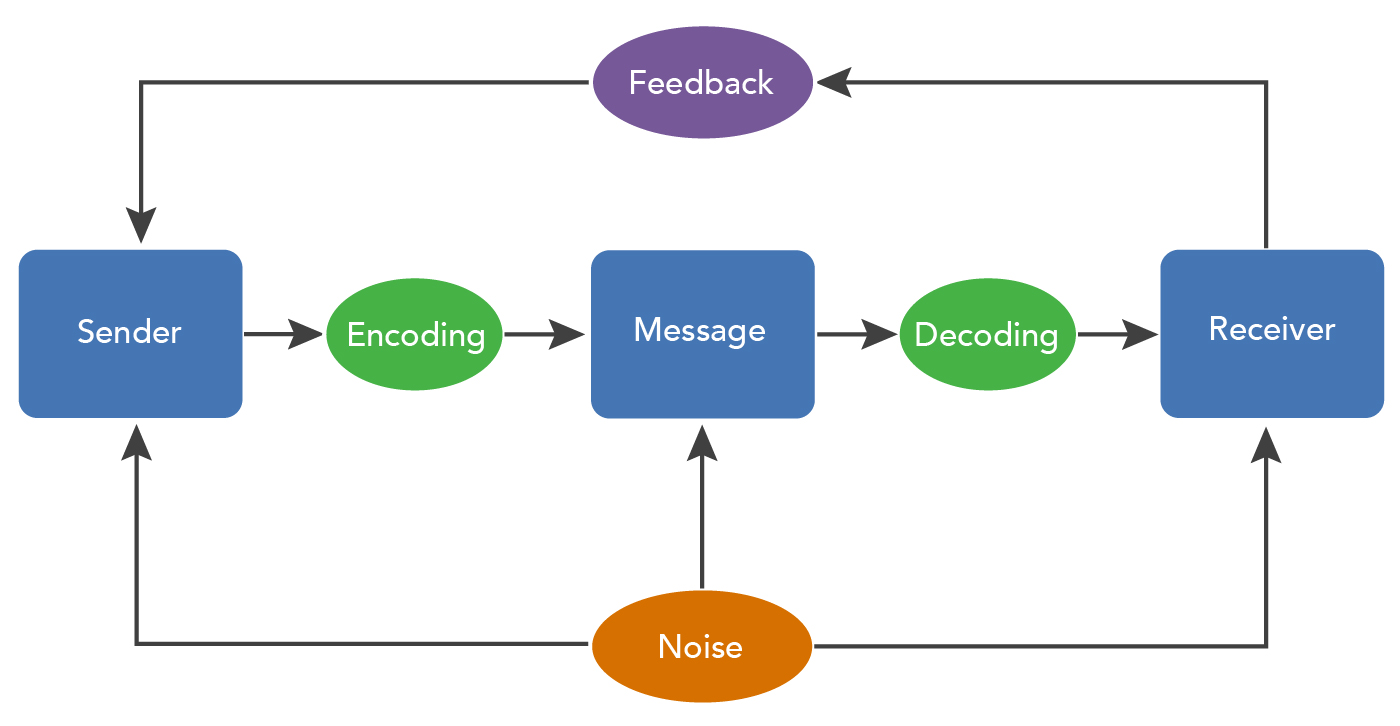
Figure: Communication Process
Promotional strategies can succeed only if customers understand what we’re trying to say. The communication process is a good way to understand the basics of how any kind of message works. In this perspective, a source transmits a message through some medium to a receiver who (we hope) listens and understands the message.
- The Source Encodes
A person or organization, the source has an idea to communicate to a receiver. Encoding means we can translate our idea into different forms to convey the desired meaning. - The Message
The message is the actual content of that physically perceivable form of communication that goes from the source to a receiver. - The Medium
No matter how the source encodes the message, it must then transmit that message via a medium, a communication vehicle that reaches members of a target audience. - The Receiver Decodes
A receiver is there to get the message. Decoding is the process whereby a receiver assigns meaning to a message; that is, she translates the message she sees or hears back into an idea that makes sense to him or her. - Noise
The communication model also acknowledges that noise—
anything that interferes with effective communication—can block messages. - Feedback
To complete the communication loop, the source gets feedback from receivers.
As you were going through your day you were exposed to many forms of marketing communication. However, noise probably interfered with most of the exposures.
|
 SELF-CHECK ACTIVITY
Updated Web 2.0 Communication Web 2.0 refers to the internet that allows receivers to play a role as the sources. Web 2.0 changed the way we look at the communications process.
Outbound marketing refers to messages that come from the organization and are intended for those who have agreed to receive them. Inbound marketing marketing methodology that is designed to draw visitors and potential customers in, rather than outwardly pushing a brand, product or service onto prospects in the hope of lead generation or customers. |
Mass Communication: The One-to-Many Model
Mass communications elements of the promotion mix include messages intended to reach many prospective customers at the same time.
- Advertising is, for many, the most familiar and visible element of the promotion mix. It is nonpersonal communication from an identified sponsor using the mass media. The most important advantage of advertising is that it reaches large numbers of consumers at one time.
- Consumer sales promotion includes programs such as contests, coupons, or other incentives that marketers design to build interest in or encourage purchase of a product during a specified period. Unlike other forms of promotion, sales promotion intends to stimulate immediate action (often in the form of a purchase) rather than build long-term loyalty.
- Public relations describes a variety of communication activities that seek to create and maintain a positive image of an organization and its products among various publics, including customers, government officials, and shareholders.
Personal Communication: The One-to-One Model
- Sometimes marketers want to communicate with consumers on a personal, one-on-one level. The immediate way for a marketer to make contact with customers is simply to tell them how wonderful the product is. This is part of the personal selling element of the promotion mix mentioned previously. It is the direct interaction between a company representative and a customer. The interaction can occur in person, by phone, or even over an interactive computer link. Behavioral targeting makes it possible for an online source to tailor a message to a specific consumer based upon what that person has viewed in the past.
- Salespeople are a valuable source of communication because customers can ask questions and the salesperson can immediately address objections and describe product benefits. Marketers also use direct mail, telemarketing, and other direct marketing activities to create personal appeals. Like personal selling, direct marketing provides direct communication with a consumer or business customer.
OVERVIEW OF PROMOTIONAL PLANNING
Just as with any other strategic decision-making process, the development of this plan includes several steps.
Part 1 (Duration: 12.45 mins) Part 2 (Duration: 8.20 mins) |
Step 1: Identify the Target Audience(s)
- An important part of overall marketing planning is to identify the target audience(s). Remember, IMC marketers recognize that we must communicate with a variety of stakeholders who influence the target market. Of course, the intended customer is the most important target audience and the one that marketers focus on the most.
Step 2: Establish the Communication Objectives
- The whole point of communicating with customers and prospective customers is to let them know in a timely and affordable way that the organization has a product to meet their needs. In most cases, it takes a series of messages that move the consumer through several stages.
- The marketer “pushes” the consumer through a series of steps, or an of-effects from initial awareness of a product to brand loyalty. The task of moving the consumer up the hierarchy becomes more difficult at each step. The steps are as follows:
- Create awareness
- Inform the market
- Create desire
- Encourage purchase and trial
- Build loyalty
Step 3: Determine and Allocate the Marketing Communication Budget
- While setting a budget for marketing communication might seem easy—you just calculate how much you need to accomplish your objectives—in reality it’s not that simple. We need to make three distinct decisions to set a budget:
Budget Decision 1: Determine the Total Promotion Budget
- Most firms rely on two budgeting techniques: top-down and bottom-up. Top-down budgeting techniques require top management to establish the overall amount that the organization allocates for promotion activities. The most common top-down technique is the percentage-of-sales method in which the promotion budget is based on last year’s sales or on estimates for the present year’s sales. The percentage may be an industry average provided by trade associations that collect objective information on behalf of member companies. The advantage of this method is that it ties spending on promotion to sales and profits. Unfortunately, this method can imply that sales cause promotional spending rather than viewing sales as the outcome of promotional efforts.
- The competitive-parity method is a fancy way of saying “keep up with the Joneses.” This method assumes that the same dollars spent on promotion by two different firms will yield the same results, but spending a lot of money does not guarantee a successful promotion. Firms certainly need to monitor their competitors’ promotion activities, but they must combine this information with their own objectives and capacities.
- The problem with top-down techniques is that budget decisions are based more on established practices than on promotion objectives. Another approach is to begin at the beginning: identify promotion goals and allocate enough money to accomplish them.
- That is what bottom-up budgeting techniques attempt.
- This bottom-up logic is at the heart of the objective-task method which is gaining in popularity. Using this approach, the firm first defines the specific communication goals it hopes to achieve, such as increasing by 20 percent the number of consumers who are aware of the brand. It then tries to figure out what kind of promotional efforts—how much advertising, sales promotion, buzz marketing etc. —it will take to meet that goal.
Budget Decision 2: Decide on a Push or a Pull Strategy
- A push strategy means that the company wants to move its products by convincing channel members to offer them and entice their customers to select these items—it pushes them through the channel. This approach assumes that if consumers see the product on store shelves, they will be enticed to make a trial purchase. In this case, promotion efforts will “push” the products from producer to consumers by focusing on personal selling, trade advertising, and trade sales promotion activities such as exhibits at trade shows.
- In contrast, a company that relies on a pull strategy is counting on consumers to demand its products. This popularity will then convince retailers to respond by stocking these items. In this case, efforts focus on media advertising and consumer sales promotion to stimulate interest among end consumers who will “pull” the product onto store shelves and then into their shopping carts.
Step 4: Design the Promotion Mix
- Designing the promotion mix is the most complicated step in marketing communication planning. It includes determining the specific communication tools that will be used, what message is to be communicated, and the communication channel(s) to be employed.
- The message should ideally accomplish four objectives (though a single message can rarely do all of these): It should get attention, hold interest, create desire, and produce action. These communication goals are known as the AIDA model.
The Promotion Mix
Marketers use the term promotion mix to refer to the communication elements that the marketer controls.
- Media advertising
- Out-of-home advertising
- Point-of-purchase advertising
- Social media
- Digital/Internet advertising
- Sales promotion
- Public relations
- Personal selling
- Direct marketing
The challenge is to be sure that the promotion mix works in harmony with the overall marketing mix to combine elements of promotion with the place, price, and product to position the firm’s offering in people’s minds.
Step 5: Evaluate the Effectiveness of the Communication Program
- The final step to manage marketing communications is to decide whether the plan is working. It is not so easy. There are many random factors in the marketing environment.
- As a rule, various types of sales promotion are the easiest to evaluate because they occur over a fixed, usually short period, making it easier to link to sales volume. Advertising researchers measure brand awareness, recall of product benefits communicated through advertising and even the image of the brand before and after an advertising campaign.
- The firm can analyze and compare the performance of salespeople in different territories, although again it is difficult to rule out other factors that make one salesperson more effective than another does. Public relations activities are more difficult to assess because their objectives relate more often to image building than sales volume.
Multichannel Promotional Strategies
Many marketers opt for multichannel promotional strategies where they combine traditional advertising, sales promotion, and public relations activities with online buzz-building activities.
Multichannel strategies boost the effectiveness of either online or offline strategies used alone. In addition, multichannel strategies allow marketers to repeat their messages across various channels; this lets them strengthen brand awareness and provides more opportunities to convert customers. Multichannel campaigns need to provide a customer experience that will engage the customer and add something of value (in addition to the product) to the customer’s life.

No comments:
Post a Comment
Note: Only a member of this blog may post a comment.